Deadheading for free seed: what you cut off is next year's garden
Deadheading is cutting off flowers once they are spent. Most people do it to keep a bed looking tidy, and on a lot of plants it does more than that: a flower that is not allowed to make seed tells the plant to try again, and you get another round of blooms.
The part people miss is the other half. Every head you cut off in July is a seed head you did not let finish. Stop cutting at the right time and the same plants hand you a winter's worth of free seed.
Deadhead all summer, then stop
Through June, July and most of August, cut spent flowers back to the next bud or set of leaves. Repeat bloomers reward it: zinnias, cosmos, marigolds, coreopsis, salvia and blanket flower all keep coming if you keep up with them. Some plants bloom once no matter what you do. Cutting those is only about looks.
Around the start of September, stop. Let the last flush of flowers finish and go to seed. The plant is shutting down anyway, and those heads are what you are going to collect.
Seed is ready when it is brown, dry and loose
This is where most home seed saving fails. A head that is still green has seed in it that is not finished, and it will not finish in a paper bag on the counter.
Wait until the head has gone brown and dry on the plant, and the seed comes away when you rub it. A few you will see around here:
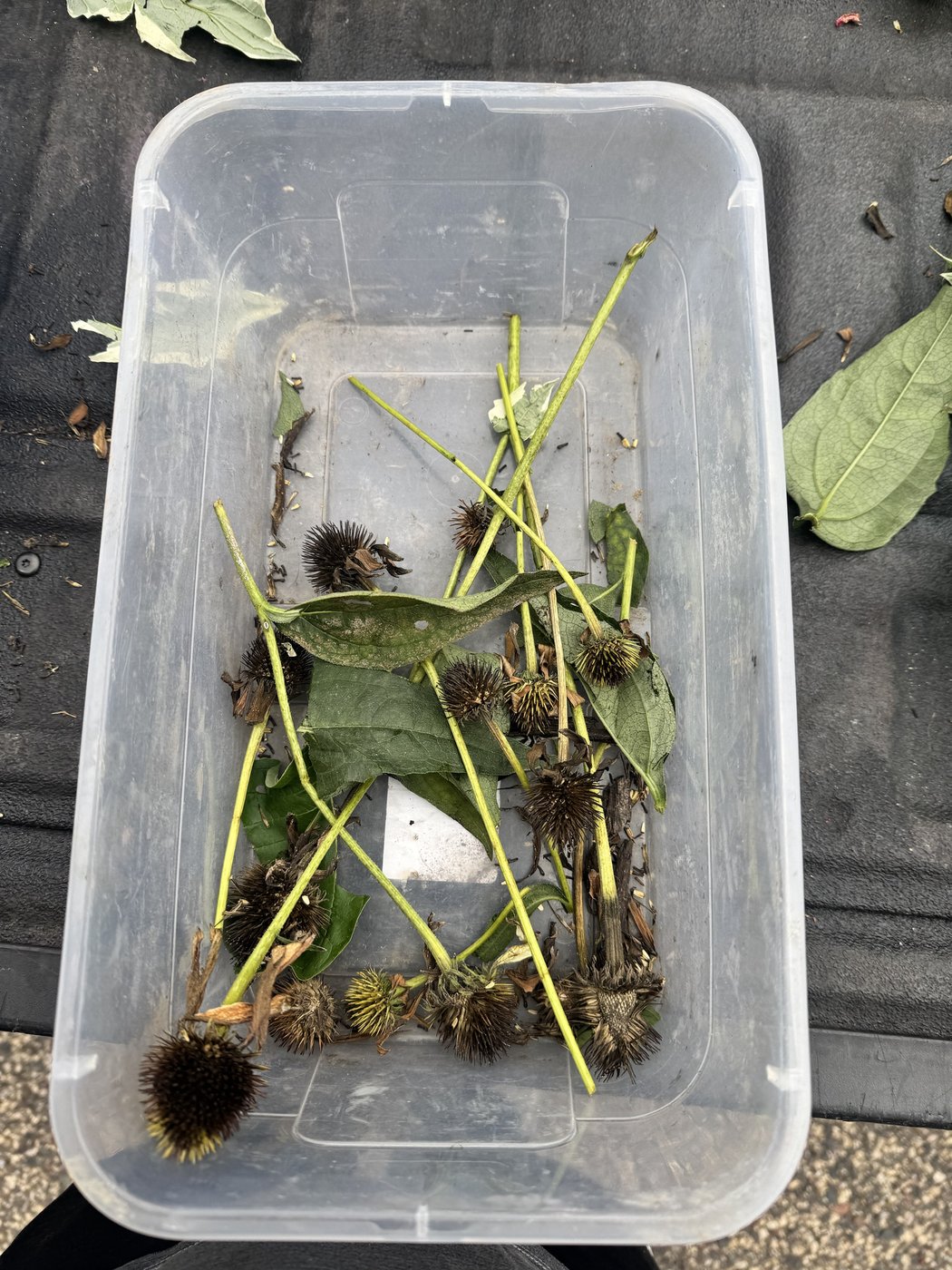
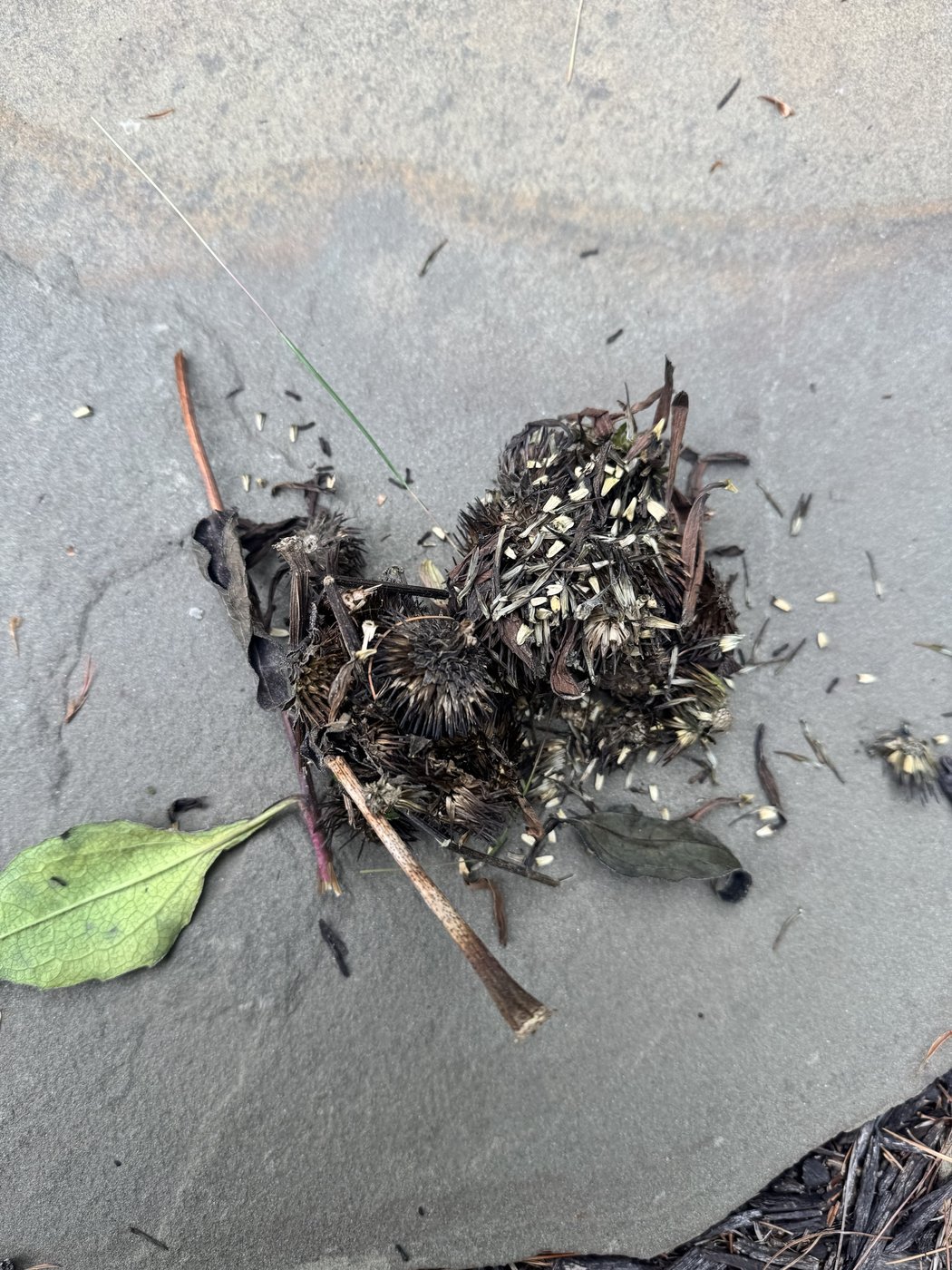
- Coneflower. The cone goes dark and hard. The seed is packed in between the spines, so wear gloves and crumble the cone into a bag.
- Black-eyed Susan. Same idea, smaller: a dry dark cone full of fine black seed.
- Liatris. The spikes go tan and fluffy. Each bit of fluff has a seed at the end of it.
- Milkweed. The pods split along a seam in fall. Take them just as they start to open, before the wind does, and strip the flat brown seeds off the silk.
- Zinnias, marigolds and cosmos. Let the flower dry completely on the stem. The seeds are the slim pieces at the base of the petals.
Collect dry, dry again, then store cool
Pick on a dry afternoon, never after rain or first thing with dew on the heads. Use paper bags or envelopes, not plastic. Plastic holds whatever moisture is left in the seed and you open it in December to a bag of mould.
Spread everything out on newspaper indoors for a week or two until it is properly dry. Then shake or crush the heads and pick out the biggest bits of chaff. It does not need to be clean. Seed does not care about a little debris.
Store it in labelled paper envelopes: the plant, the date, and where it came from. Keep them somewhere cool, dark and dry. A sealed jar in the fridge works once the seed is fully dry, and a desiccant packet in the jar helps. Most seed keeps for a few years, but it loses some viability every year, so sow what you saved rather than stockpiling it.
Natives want a winter first
This is the difference that decides whether the seed comes up.
Annuals like zinnias and marigolds just need to be sown in spring after the last frost. A lot of native seed will not germinate until it has been through a cold, wet stretch. That is how it avoids sprouting in October and dying in November.
You have two ways to give it that:
- Let winter do it. Sow outdoors late, once the ground is cold enough that nothing can come up, usually late November into December here. The seed sits there all winter and comes up in spring on its own schedule. There is more on that in plant natives now, seed them in December.
- Fake it in the fridge. Mix the seed with a handful of barely damp sand in a labelled bag and keep it in the fridge for one to two months before you sow in spring. Native seed suppliers list how long each species wants, and it is worth checking, because it varies.
Know what will come true
Seed from a straight native species or an old open-pollinated variety grows into more of the same. Seed from a hybrid, anything sold as F1, usually does not, and you get a mix of its parents instead. Named cultivars of natives can do the same thing. None of that is a reason not to try. Just know that a fancy variety may not come back looking like itself.
Plants of the same kind also cross with each other, so seed from a bed with three colours of zinnia in it will give you a mix.
Leave some, and only take what is yours
Two limits worth keeping.
Do not take every head. Goldfinches and other seed eaters get through the winter on exactly these, and standing seed heads are part of why a bed looks alive in January. Take a share and leave the rest standing, which is the same line as in what to cut and what to leave. And never save seed from anything invasive. That is not saving seed, that is planting a problem.
Collect from your own yard, or with permission. Parks and public land often do not allow collecting, and rare plants should be left alone wherever they are.
Test it before you count on it
If you are not sure a batch is any good, count out ten seeds, fold them into a damp paper towel, put it in a bag and keep it somewhere warm. Check after a week or two. Seven sprouts means about seventy percent will come up. Natives that need the cold treatment will not sprout in this test until they have had it, so run it after the fridge, not before.
A few envelopes of seed from this fall is a bed's worth of plants next year, for the cost of stopping the pruners a few weeks early.